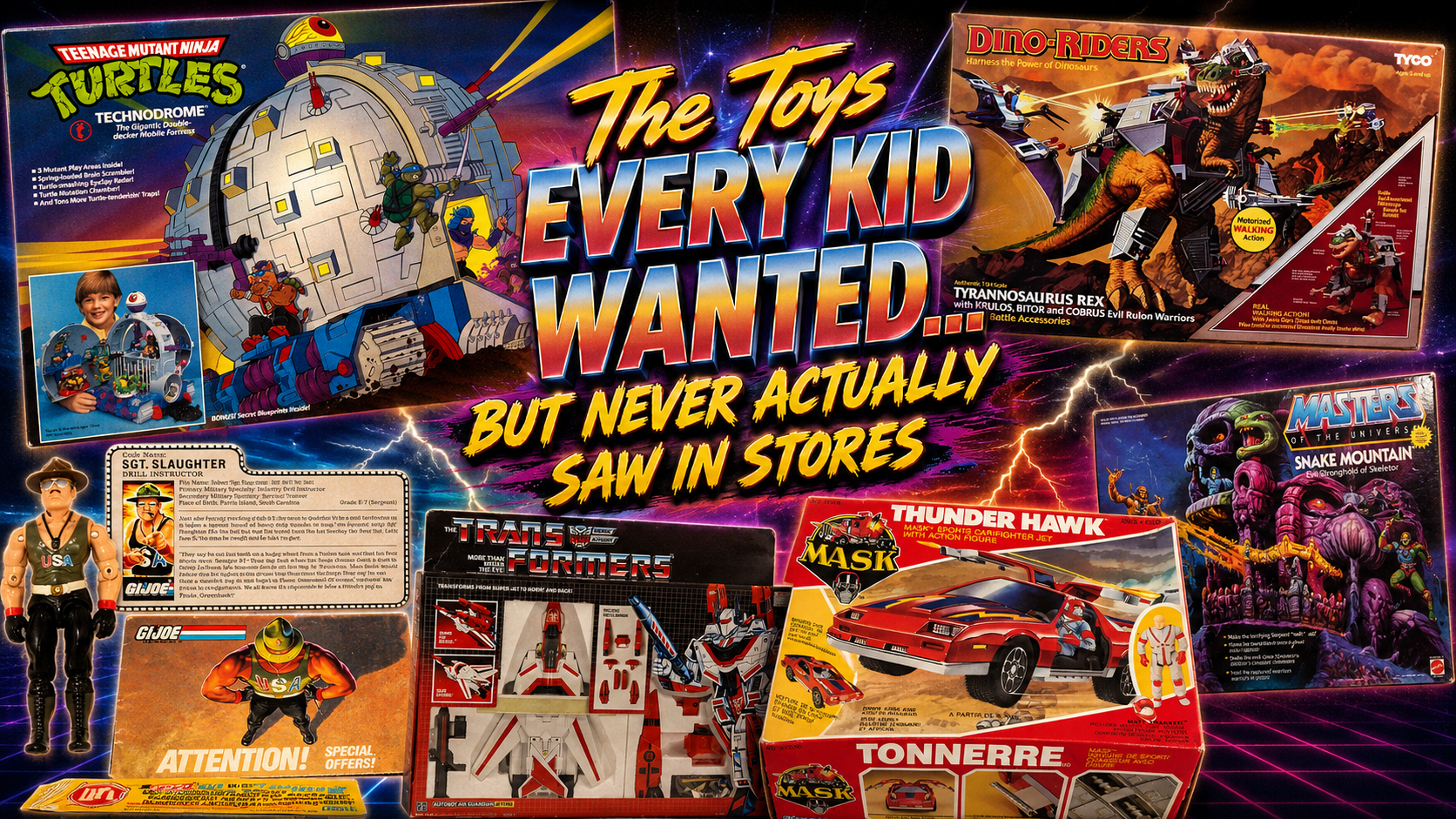
The Toys Every Kid Wanted… But Never Actually Saw in Stores
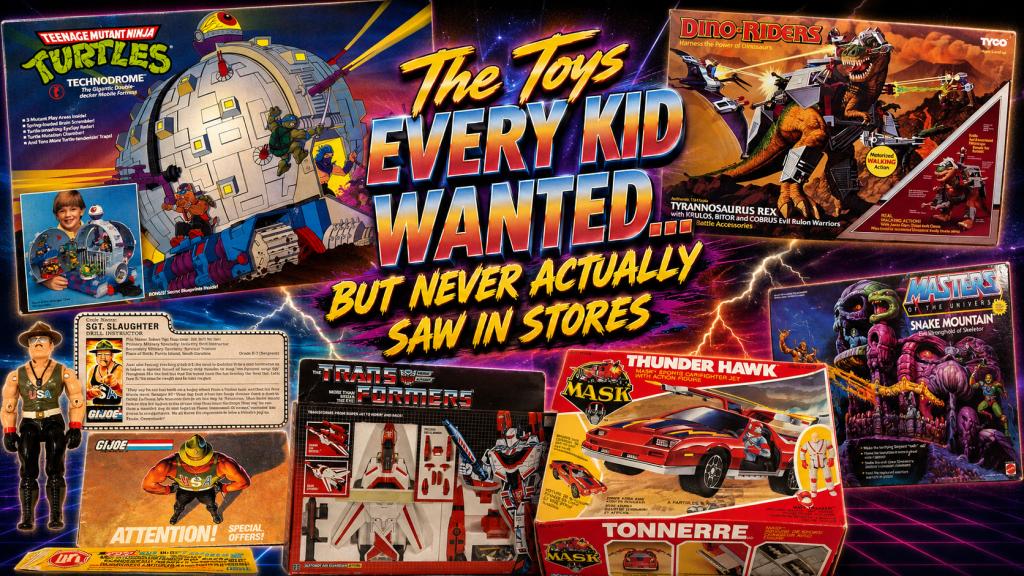
In the 1980s, some toys became “shelf ghosts” not because kids imagined them, but because the toy aisle worked against them. A figure like G.I. Joe Sgt. Slaughter was not originally a normal retail release at all; YOJOE notes that he was available through Hasbro Direct mail order in early 1986, then only returned “on and off” from 1987 through 1989. Larger toys had their own problems: Snake Mountain was a big villain headquarters playset, the Technodrome was a huge 1990 TMNT playset at the height of Turtlemania, and Dino-Riders’ T-Rex was an electronic, oversized dinosaur set, meaning they took up more shelf space and carried higher price points than standard figures. Then there were toys like M.A.S.K. Thunderhawk, one of the most popular vehicles in Kenner’s line, where demand could wipe out stock almost as soon as it appeared. That is what made these toys legendary: they were advertised, talked about, circled in catalogs, and whispered about on playgrounds — but for many kids, they were almost never actually sitting on the shelf when you got to the store.
G.I. Joe Sgt. Slaughter
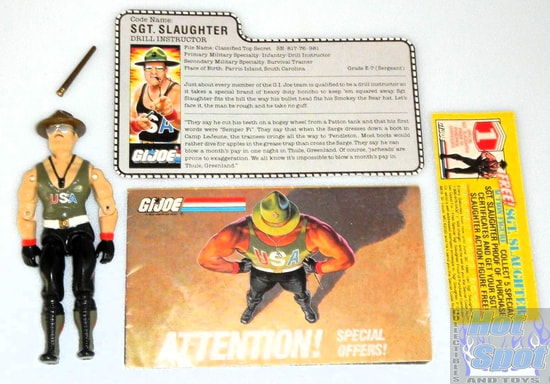
Every 1980s kid knew Sgt. Slaughter was not just another G.I. Joe. He was loud, tough, larger than life, and already famous from the wrestling world before he ever barked orders at Cobra on a kid’s bedroom floor. The problem was that the original Sgt. Slaughter figure was not a simple “walk into the toy aisle and grab him” release. YOJOE notes that Sgt. Slaughter was available through Hasbro Direct mail order in early 1986 and then returned on and off from 1987 through 1989. That made him feel less like a normal action figure and more like a classified mission. If a kid in the neighborhood actually had him, that kid did not just own a toy — he had evidence that miracles came in cardboard mailers.
Transformers Jetfire
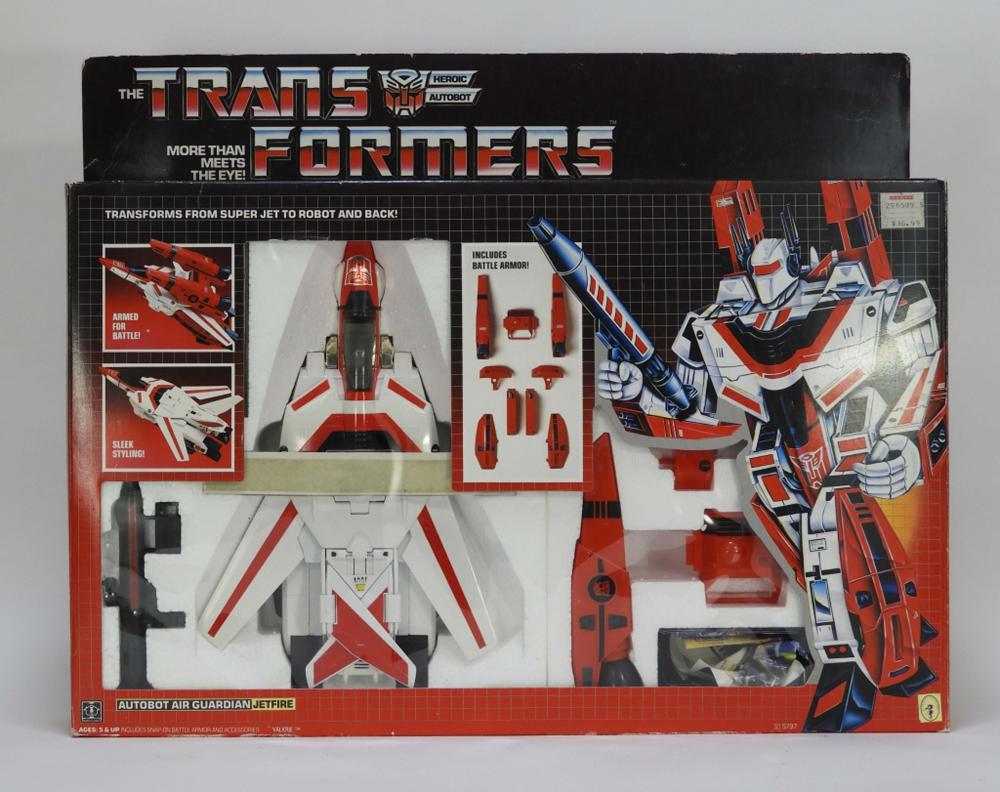
Jetfire was the kind of Transformer that stopped kids cold. He was big, white, red, sleek, and looked more like a futuristic anime fighter than anything else sitting on the shelf. The Toy Collectors Guide lists G1 Jetfire as a 1985–1986 release and describes him as an Autobot Air Guardian who transformed into an armored jet with booster armor. For many kids, though, Jetfire existed mostly in catalogs, commercials, and playground rumors. You heard someone’s cousin had one. You saw the box art. You stared at the empty shelf space where he should have been. But actually finding him in the wild felt like spotting Bigfoot wearing an Autobot symbol.
Masters of the Universe Snake Mountain
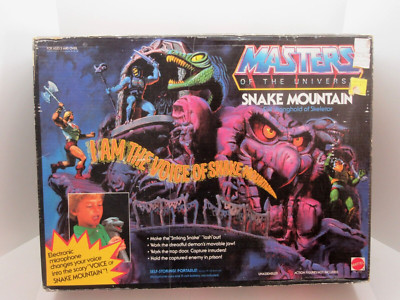
Castle Grayskull may have been the heroic dream house of Eternia, but Snake Mountain was where every kid wanted the villains to throw a proper party. Mattel’s sinister purple fortress looked dangerous before you even opened it. The Toy Collectors Guide notes that Snake Mountain gave Skeletor and his evil forces a stronghold of their own. That was the magic. It was not just a playset; it was a lair. A weird, growling, monster-faced monument to bad-guy imagination. But because of its size and price, plenty of kids only saw it in catalogs or at that one lucky friend’s house — the friend whose basement suddenly became Eternia headquarters for the entire block.
Teenage Mutant Ninja Turtles Technodrome
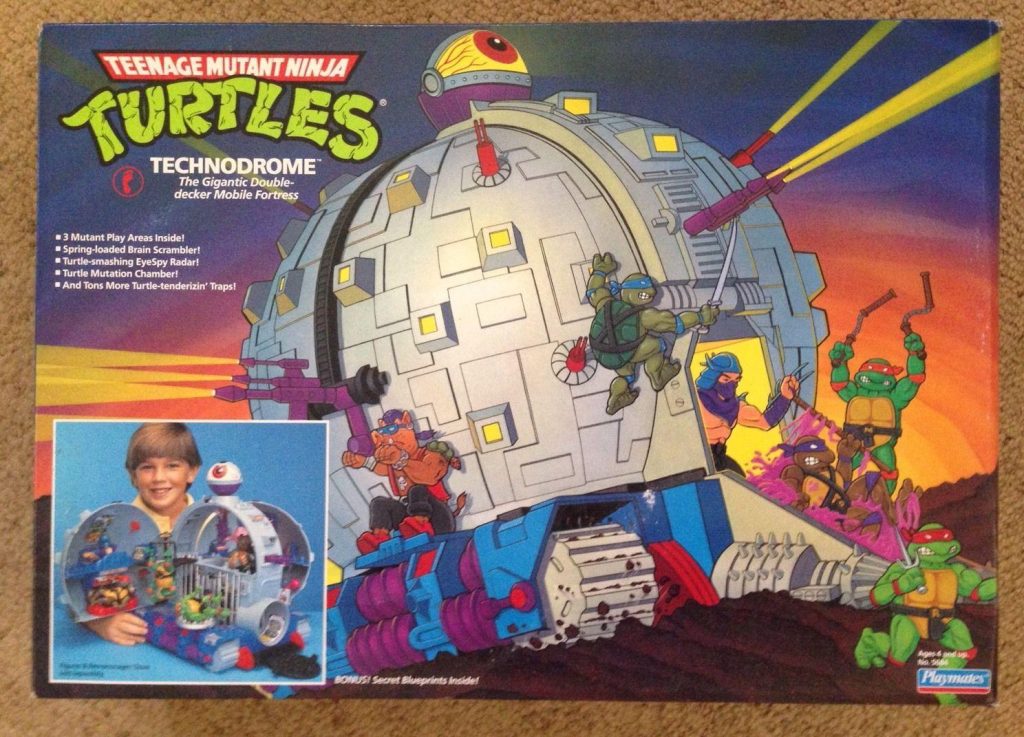
By the time Turtlemania hit full blast, toy aisles looked like they had been raided by the Foot Clan. Anything with a shell, sewer lid, or pizza joke disappeared fast. Then came the Technodrome, the giant rolling fortress of Krang and Shredder. The Toy Collectors Guide says the 1990 Technodrome carried a $49.99 price tag and took up enough shelf space that retailers were not exactly eager to order huge quantities. That explains why so many kids remember wanting it more than owning it. It was enormous, strange, expensive, and totally irresistible — the kind of toy that made a kid press their face against the glass at a toy store and start negotiating Christmas in July.
Dino-Riders Tyrannosaurus Rex
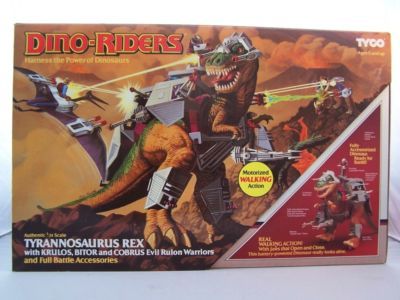
Dino-Riders was already an unbeatable idea: dinosaurs with lasers. But the Tyrannosaurus Rex was the king of the whole prehistoric battlefield. Tyco Collectors describes the 1988 T-Rex set as a 1/24 scale action figure set featuring Krulos, Bitor, and Cobrus, built around armored dinosaurs and futuristic weaponry. Transformerland also lists the T-Rex with Krulos, Bitor, and Cobrus as a 1988 Series 1 Dino-Riders release. For kids, this was not just another dinosaur toy. This was a walking war machine. The box alone looked like it had escaped from a Saturday morning fever dream. But with its size, electronics, accessories, and premium price, finding one on a shelf felt almost as unlikely as discovering a real dinosaur in the backyard.
M.A.S.K. Thunderhawk
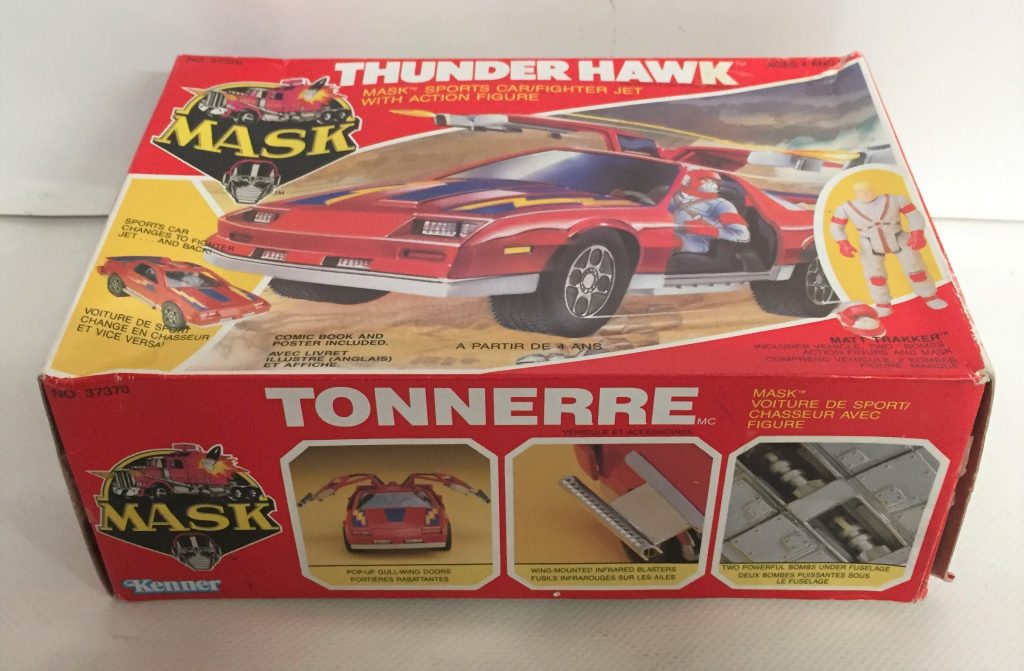
Thunderhawk was everything cool about the 1980s compressed into one red sports car. It was sleek. It had gull-wing doors. It turned into a flying attack vehicle. It came with Matt Trakker and his Spectrum mask. Retro Toy Quest notes that Kenner produced the M.A.S.K. Thunder Hawk in 1985 and describes it as one of the most popular vehicles in the original series. The Toy Collectors Guide also notes that Kenner launched M.A.S.K. in 1985 with ordinary-looking vehicles that changed to reveal weapons, armor, or alternate vehicle modes. That was the hook. Thunderhawk looked like something your dad might drive, then suddenly became something that could fight V.E.N.O.M. from the sky. If your local store had one, it probably was not there long.
That was the strange beauty of being a kid in the 1980s. The toys felt bigger because you could not always get them. You circled them in catalogs, hunted them in department stores, asked about them at birthdays, and listened to wild playground intelligence reports about who saw what at Toys “R” Us. Sometimes you found the toy. Sometimes you didn’t. But the ones that escaped you became legendary. They were not just action figures, vehicles, or playsets. They were shelf ghosts — the toys every kid wanted, every kid talked about, and only a lucky few actually brought home.